

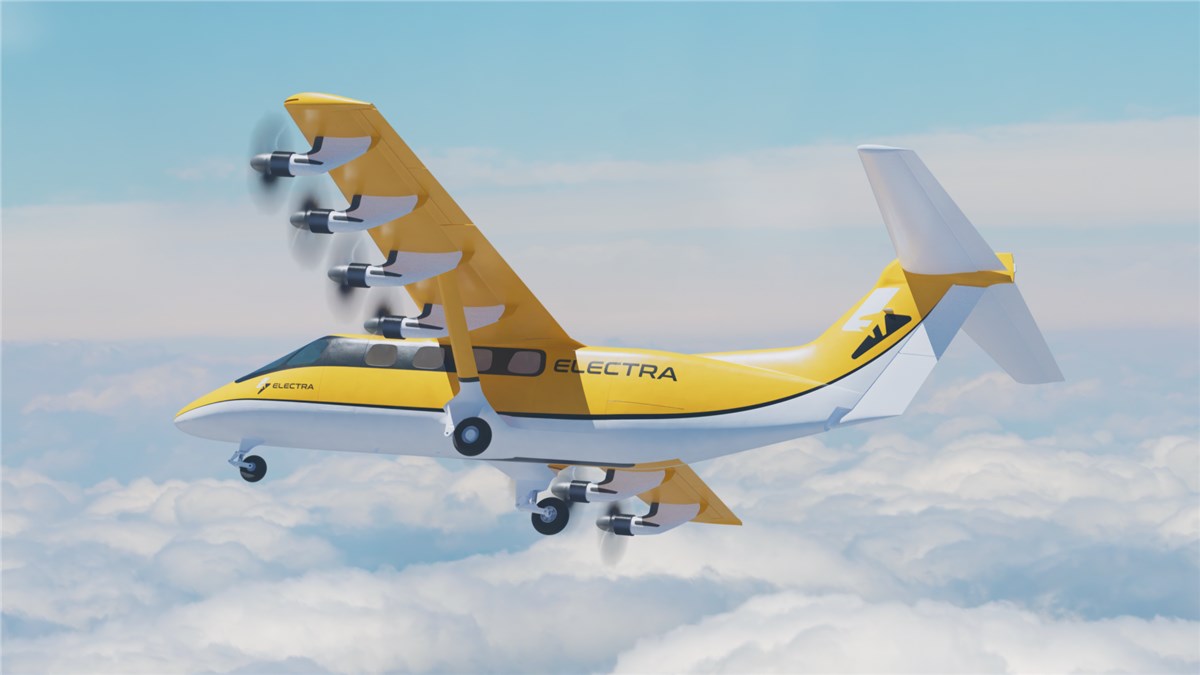
Electra.aero is dramatically accelerating its mission to transform regional air travel with a major expansion of its facilities in the United States and Switzerland. This strategic growth supports the rapid development of its flagship nine-passenger hybrid-electric aircraft, the EL9, and underscores the company’s commitment to attracting top-tier engineering talent to bring its vision of Direct Aviation to life.
The company’s headquarters at Manassas Regional Airport in Virginia has been significantly enhanced with a new 15,000-square-foot hangar and 6,000-square-foot office space. This expansion, complementing an existing 36,000-square-foot facility, will house a rapidly growing team; Electra has more than doubled its workforce in 2025 and plans to add dozens more engineers. Simultaneously, its European research and development center in Bleienbach, Switzerland, has been expanded, solidifying a global innovation footprint.
The core of this expansion is the groundbreaking EL9 Ultra Short aircraft. Designed for ultra short takeoff and landing, the EL9 can operate in spaces as short as 150 feet. This revolutionary capability is achieved through a proprietary combination of hybrid-electric propulsion and blown-lift technology. By enabling operations from thousands of non-traditional sites like small fields or parking lots, the EL9 bypasses congested hubs to create direct, point-to-point connections. This promises to drastically cut travel time while also reducing noise and emissions, making regional travel more sustainable and convenient.
The real-world potential of this technology has been rigorously demonstrated through nearly two years of flight tests with a two-seat prototype, the EL2. Successful demonstrations have included operations from austere environments, university campuses, and in partnership with the US Air Force Research Laboratory, highlighting the platform’s versatility for both commercial and defense applications. The company’s aggressive certification timeline aims to see the EL9 begin flight testing in 2027, achieve FAA certification in late 2029, and enter service in 2030.
