

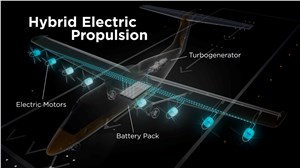
Electra has signed a production contract with Evolito to supply the electric propulsion units (EPUs) for its revolutionary EL9 Ultra Short hybrid-electric aircraft. This partnership is a pivotal step toward realizing a new vision for regional travel, termed Direct Aviation, which aims to provide safe, quiet, and affordable air mobility.
The nine-passenger EL9 is a game-changing aircraft, designed for ultra-short takeoff and landing. It can operate in and out of spaces as small as 150 feet (45 meters), a capability that unlocks thousands of new potential access points by utilizing existing small infrastructure. This revolutionary performance is enabled by a distributed electric propulsion system, where eight propellers are driven by Evolito’s high-performance EPUs.
These aerospace-grade electric propulsion units integrate lightweight motors, high-integrity motor controllers, and advanced thermal controls. Their durable and cost-effective design is engineered for type-certification and scalable production, promising operators exceptional long-term value through low maintenance and proven reliability. The core technology enabling the EL9’s performance is its patented blown-lift technology. The electric engines blow air over the wing and large flaps, creating an ultra-high lift coefficient that has been validated at more than seven times that of conventional, unblown wings. This allows for very low airspeeds and precision landings in a fraction of the space required by traditional aircraft, while also dramatically reducing noise and emissions.
With over 2,200 pre-orders from more than 60 commercial customers worldwide, the EL9 is one of the most in-demand aircraft in the advanced air mobility (AAM) sector. Electra plans for its first test flights in 2027, with certification and commercial service entry anticipated in late 2029 under FAA Part 23 regulations, accelerating the transition to sustainable aviation.
