

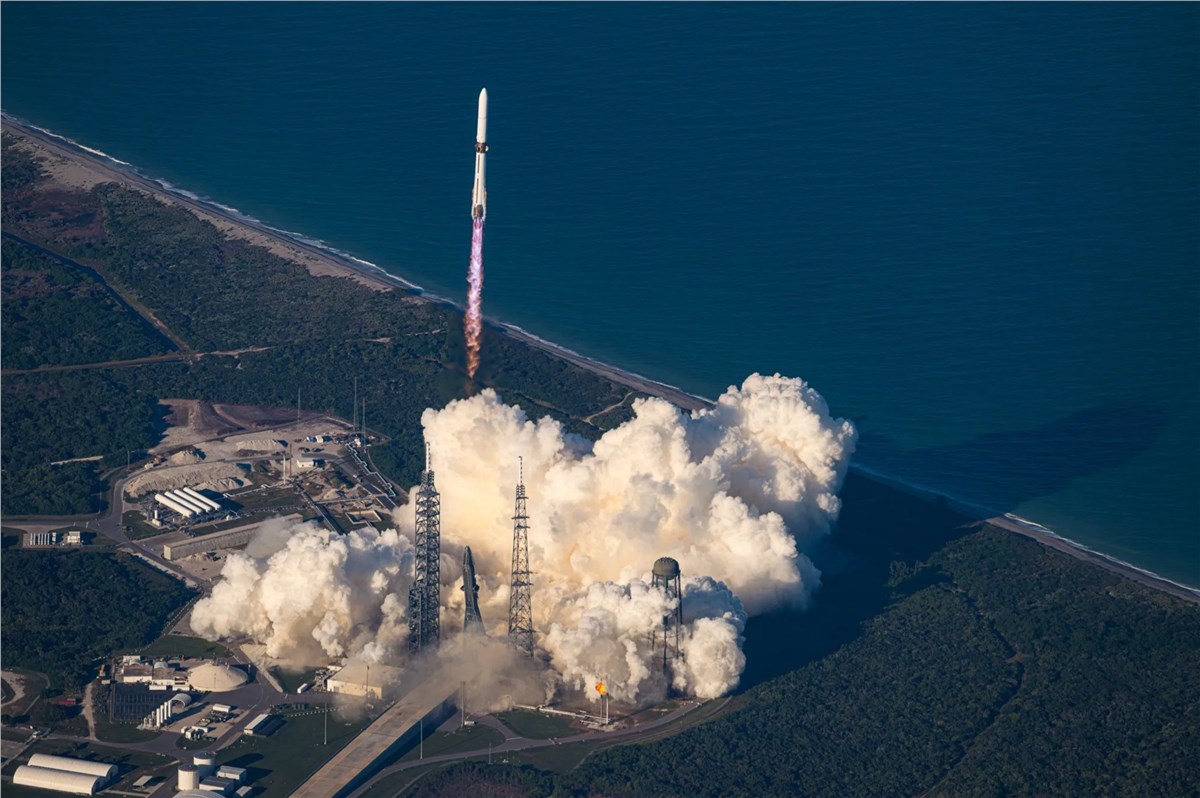
In a significant step for interplanetary science and future human exploration, NASA has successfully launched two small satellites, collectively known as ESCAPADE, aboard a Blue Origin New Glenn rocket from Florida. The mission’s primary goal is to unravel how the Sun stripped Mars of its atmosphere, transforming it from a potentially habitable world into the cold desert planet we see today.
The twin spacecraft, built by Rocket Lab, will journey to Mars to study the planet’s interaction with the solar wind—a relentless, million-mile-per-hour stream of charged particles from the Sun. By analyzing how this solar wind has eroded the Martian atmosphere over billions of years, scientists hope to piece together the planet’s climatic history.
“This mission will help reveal how Mars became a desert planet,” said acting NASA Administrator Sean Duffy. He also emphasized the mission’s role in preparing for crewed missions, noting that the data will be “critical to protect future NASA explorers.”
The ESCAPADE mission is notable for its unique and efficient trajectory. Instead of flying directly to Mars, the spacecraft will first travel to a point in space a million miles from Earth. They will then use a gravity assist from Earth in late 2026 to slingshot toward the Red Planet, with arrival expected in September 2027. This innovative “loiter” orbit path could enable future missions to launch nearly anytime, rather than being constrained to brief, two-year planetary alignment windows.
Upon arrival, the twin satellites will become the first coordinated dual-spacecraft mission to orbit another planet. Flying in a “string-of-pearls” formation, they will conduct stereo observations, providing a dynamic, real-time view of how solar storms and the solar wind impact Mars’ magnetic environment and residual atmosphere. This data is vital for understanding the space weather conditions that will affect future astronauts and their equipment on the surface.
The launch also featured a successful demonstration of new space communications technology, showcasing NASA’s commitment to commercializing next-generation services for its science missions.
