
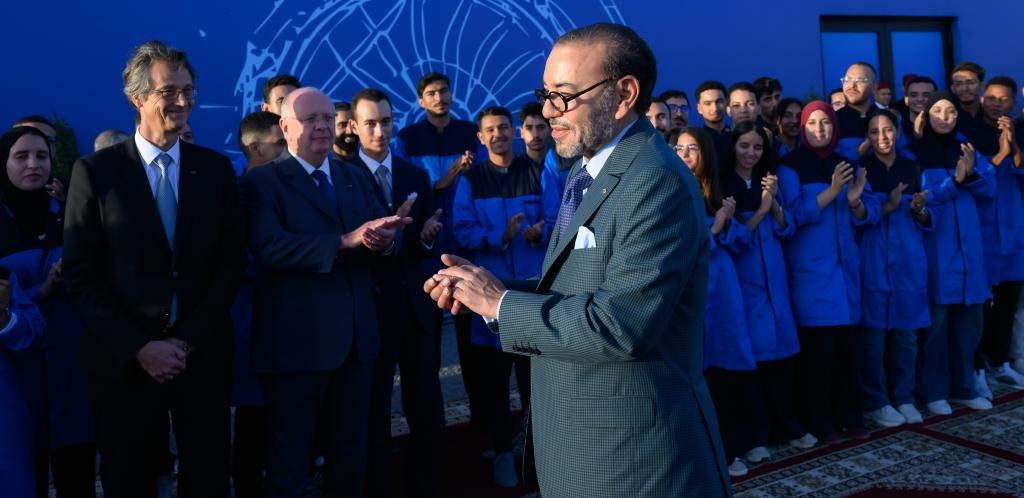
During a ceremony attended by His Majesty King Mohammed VI and Safran’s top executives, the global aerospace group significantly strengthened its industrial footprint in Morocco. The cornerstone is a new LEAP engine Maintenance, Repair, and Overhaul (MRO) shop in the Casablanca airport zone. This facility, announced during a French state visit, will address the growing global air traffic demand by servicing CFM International LEAP engines, which power Airbus A320neo and Boeing 737 MAX aircraft. The 25,000 sq.m MRO shop is a 120 million euro investment, will handle 150 engines annually from 2027, and create 600 jobs by 2030.
Simultaneously, Safran selected Morocco for a new LEAP-1A engine assembly line dedicated to Airbus. This 200 million euro plant, operational by late 2027, will complement production in France to support a ramp-up to 2,500 LEAP engines yearly. The 13,000 sq.m facility will assemble 350 engines annually and generate 300 jobs. This industrial complex will feature a shared test bench for both new and overhauled engines.
Aligning with its environmental strategy, Safran signed a Memorandum of Understanding for renewable energy access for its Moroccan sites from 2026, supporting its goal to reduce carbon emissions. The CEO highlighted Morocco’s supportive government and the projects’ role in developing the local aerospace industry.
Furthermore, Safran is expanding three existing sites—Safran Aerosystems in Tiflet, Safran Electronics & Defense in Casablanca, and Safran Electrical & Power in Ain Atiq—with operations starting between 2026 and 2027. Overall, these two new facilities and expansions represent an investment exceeding 350 million euros. To support this scaling-up of operations, Safran will recruit over 2,000 people in the next five years, bolstering its 26-year presence where it already employs over 4,800 people and leads the aerospace sector.
