

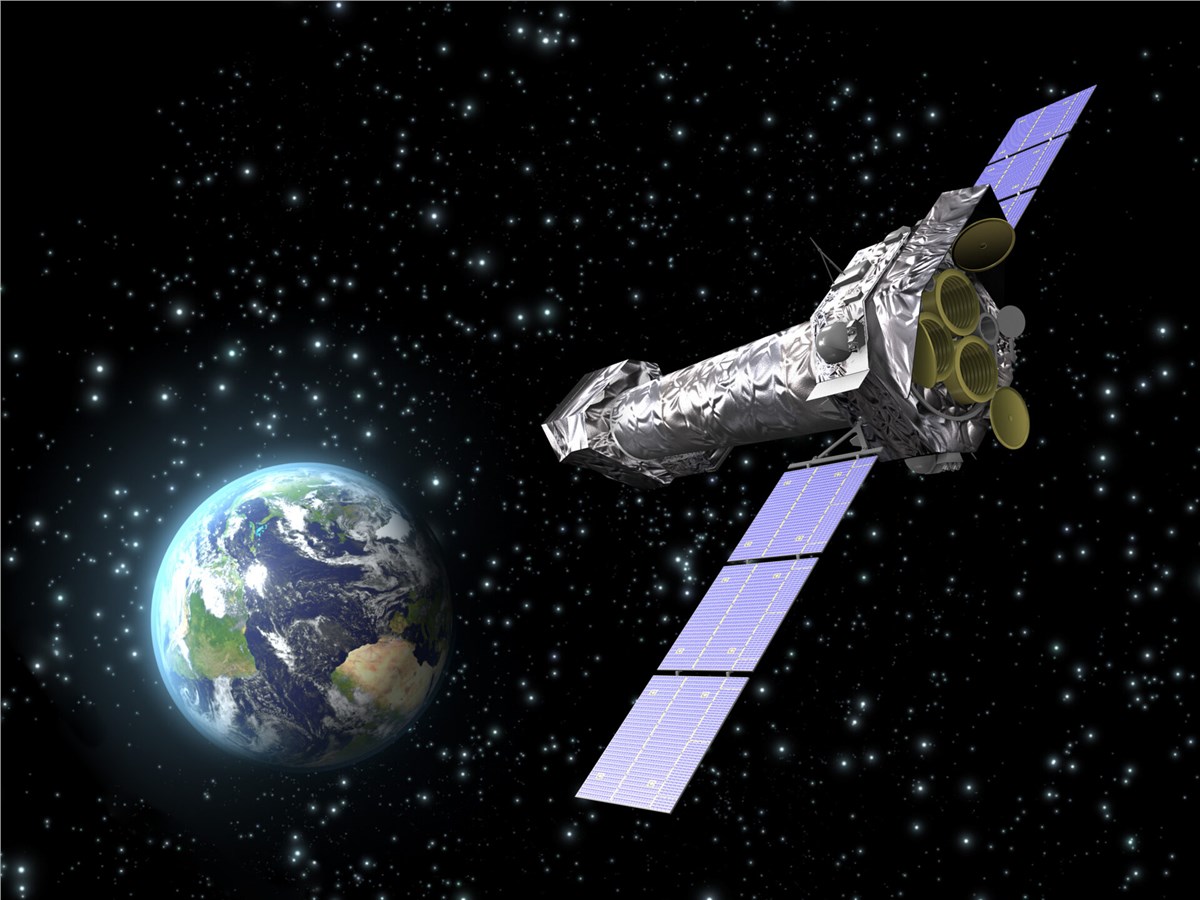
Astronomers have achieved a milestone by definitively detecting a coronal mass ejection (CME) from a star other than our Sun. Using the European Space Agency’s XMM-Newton space observatory and the LOFAR radio telescope, researchers observed an explosive burst of material powerful enough to strip away the atmosphere of any nearby planet. This discovery ends a decades-long search to confirm such stellar eruptions exist beyond our solar system.
The observed CME originated from a red dwarf star located approximately 130 light-years away. This type of star is common in the Milky Way and hosts many known exoplanets. However, this particular star is far more active than the Sun, with a magnetic field 300 times more powerful and a much faster rotation. The key to the discovery was a short, intense burst of radio waves, a signal that only occurs when material definitively escapes a star’s magnetic influence. New data processing methods for LOFAR were crucial for detecting this radio signal.
To fully understand the event, the team used XMM-Newton to gather essential data on the star’s X-ray brightness, temperature, and rotation. This context proved the radio signal was from a CME and revealed its extraordinary properties. The ejection was measured traveling at a super-fast 2400 km per second, a speed rarely seen in solar CMEs. This combination of high speed and density means it could completely erode the atmospheres of planets closely orbiting the star.
This finding has profound implications for the search for habitable worlds and life. A planet’s habitability is traditionally judged by its orbit within the star’s “habitable zone,” where liquid water could exist. But if a star is highly active, frequent and powerful CMEs can render a planet barren by destroying its atmosphere, regardless of its ideal location. The study opens a new frontier for studying space weather around other stars, suggesting it may be even more extreme around the smaller red dwarfs that host most known exoplanets. The collaborative work between the two telescopes was essential, demonstrating the power of multi-wavelength astronomy in exploring the universe and assessing the potential for life on distant worlds.
