

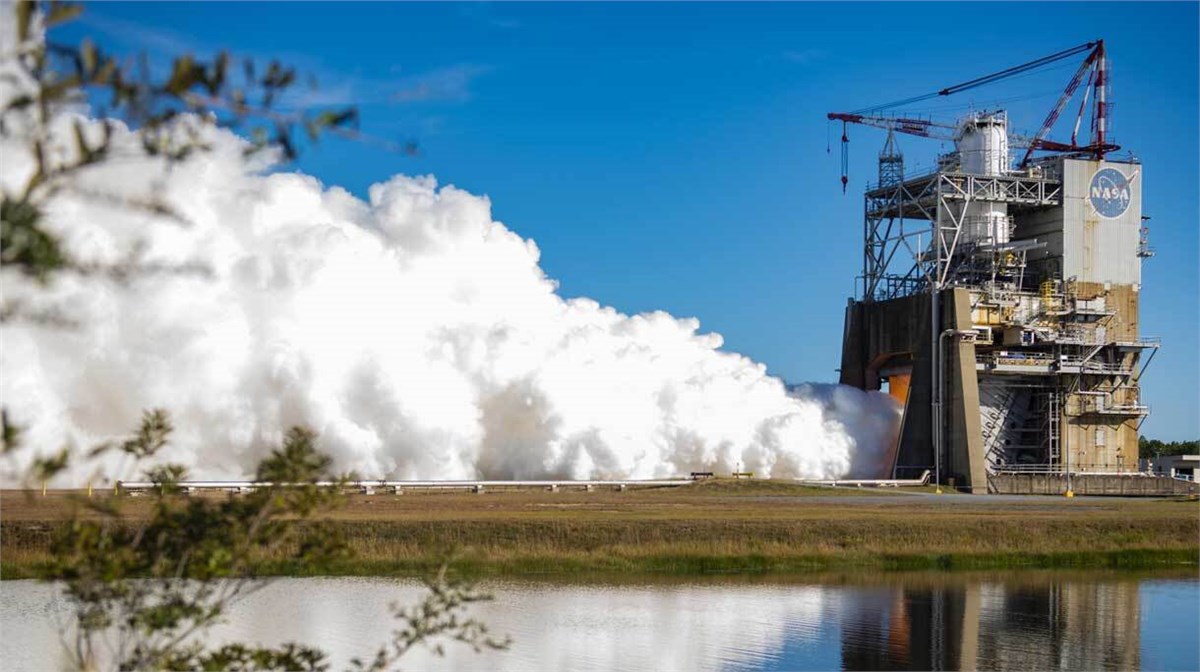
In a significant milestone for deep space exploration, NASA, in partnership with L3Harris Technologies, has successfully conducted a hot-fire test of the second new RS-25 engine destined for the Space Launch System (SLS) rocket. This engine is a critical component for the core stage of the SLS that will launch the Artemis V mission, continuing America’s return to the Moon. The test, performed at NASA’s Stennis Space Center, involved a full-duration 500-second firing, demonstrating the engine’s robust performance and reliability by operating at 111% of its original rated power level.
The RS-25 engines are the workhorse of the Artemis program, with four engines required to power every SLS rocket. Their proven power and reliability are essential for sending the Orion spacecraft and its astronauts on their journey to help establish a sustainable presence on the lunar surface. This effort is a foundational step, paving the way for future crewed missions to Mars. The success of these engines directly supports the overarching goals of the Artemis campaign, which aims to land the first woman and the next man on the Moon.
The newly tested engine represents the forefront of modern propulsion technology. It is the second flight-ready unit produced by L3Harris’s Aerojet Rocketdyne division using advanced manufacturing techniques. These methods, which include sophisticated 3D printing, are a revolutionary shift from the processes used to build the original space shuttle main engines. By leveraging these innovations, engineers have significantly streamlined production, achieving a remarkable 30% reduction in production costs compared to the RS-25 engines that flew on the Space Shuttle Program.
This strategic move to more cost-effective manufacturing is vital for the long-term sustainability of deep space exploration. The first four Artemis missions will utilize upgraded RS-25 engines with existing stock from the shuttle era. However, beginning with Artemis V, missions will be powered by these newly produced, next-generation engines. This transition ensures a stable and affordable engine supply for the numerous SLS flights planned for the coming decades. As expressed by L3Harris leadership, this advancement embodies the pioneering spirit of the nation, propelling a new era of discovery as the U.S. approaches its 250th anniversary.
