

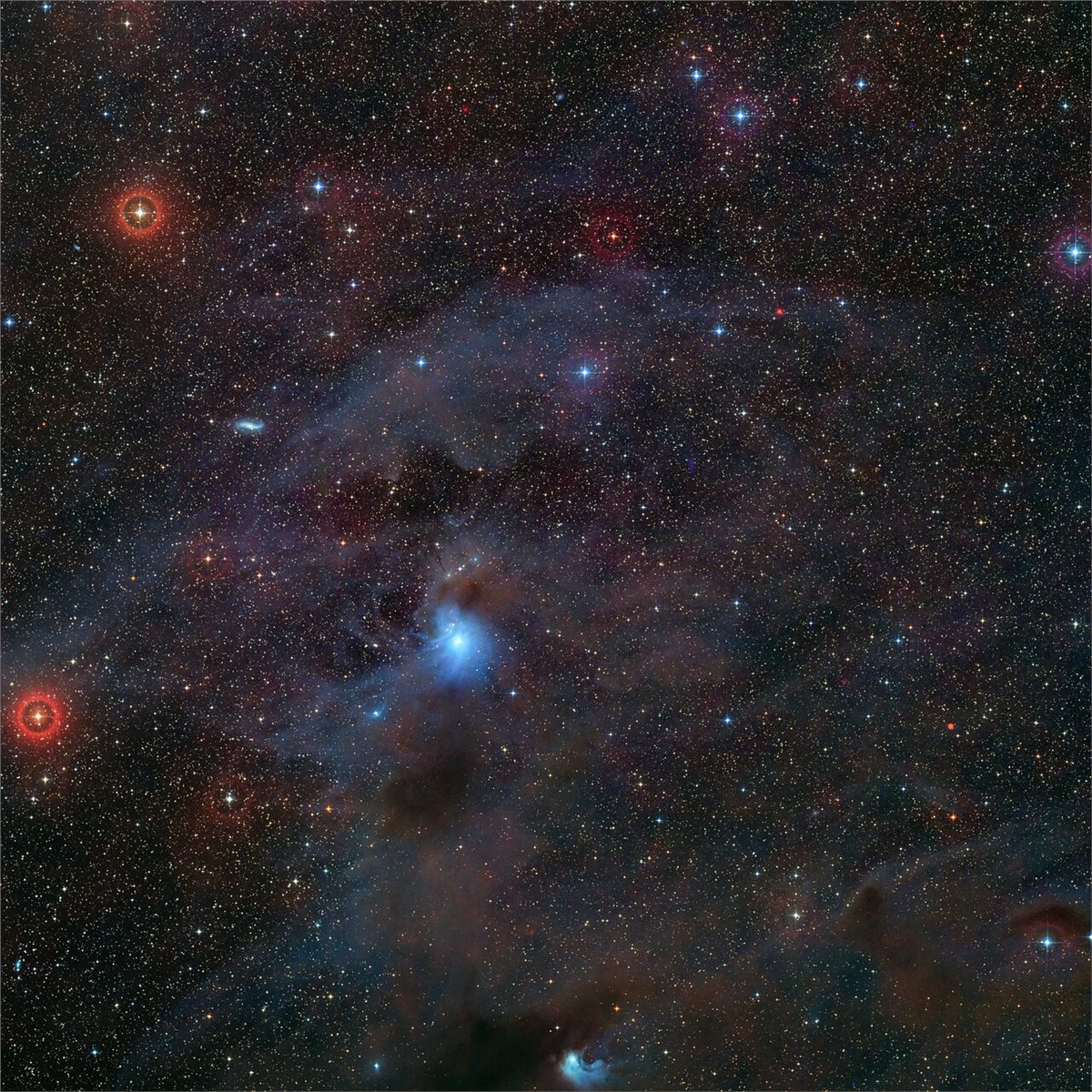
Astronomers using the European Southern Observatory’s Very Large Telescope (VLT) have discovered a record-breaking ‘growth spurt’ in a rogue planet, a free-floating world not bound to any star. This object, with a mass five to ten times that of Jupiter, is accreting material from its surrounding disc of gas and dust at an astonishing rate of six billion tonnes per second—the strongest accretion rate ever recorded for any planetary-mass object.
The rogue planet, officially named Cha 1107-7626 and located 620 light-years away in the constellation Chamaeleon, is still in its formation stages. The international research team, led by Víctor Almendros-Abad, found that its accretion process is not steady. By August 2025, the planet was consuming material about eight times faster than just months prior. This dramatic burst provides crucial insights into how these mysterious objects form and grow.
The discovery, made with the X-shooter spectrograph on the VLT and supplemented by data from the James Webb Space Telescope, suggests that at least some rogue planets may form similarly to stars. The observed accretion burst, a phenomenon previously seen in young stars, implies a shared formation path. Furthermore, the team found that magnetic activity likely channeled the material onto the planet, marking the first time such a magnetic role has been observed in a planetary object. The chemistry of the circumstellar disc also changed during the event, with the new appearance of water vapour.
This finding blurs the line between stars and planets, challenging our conventional classifications. Free-floating planets are notoriously difficult to study due to their faintness, but future instruments like ESO’s upcoming Extremely Large Telescope (ELT) promise to reveal more of these enigmatic worlds, helping astronomers understand their star-like nature and the dynamic processes of their earliest formation periods.
