

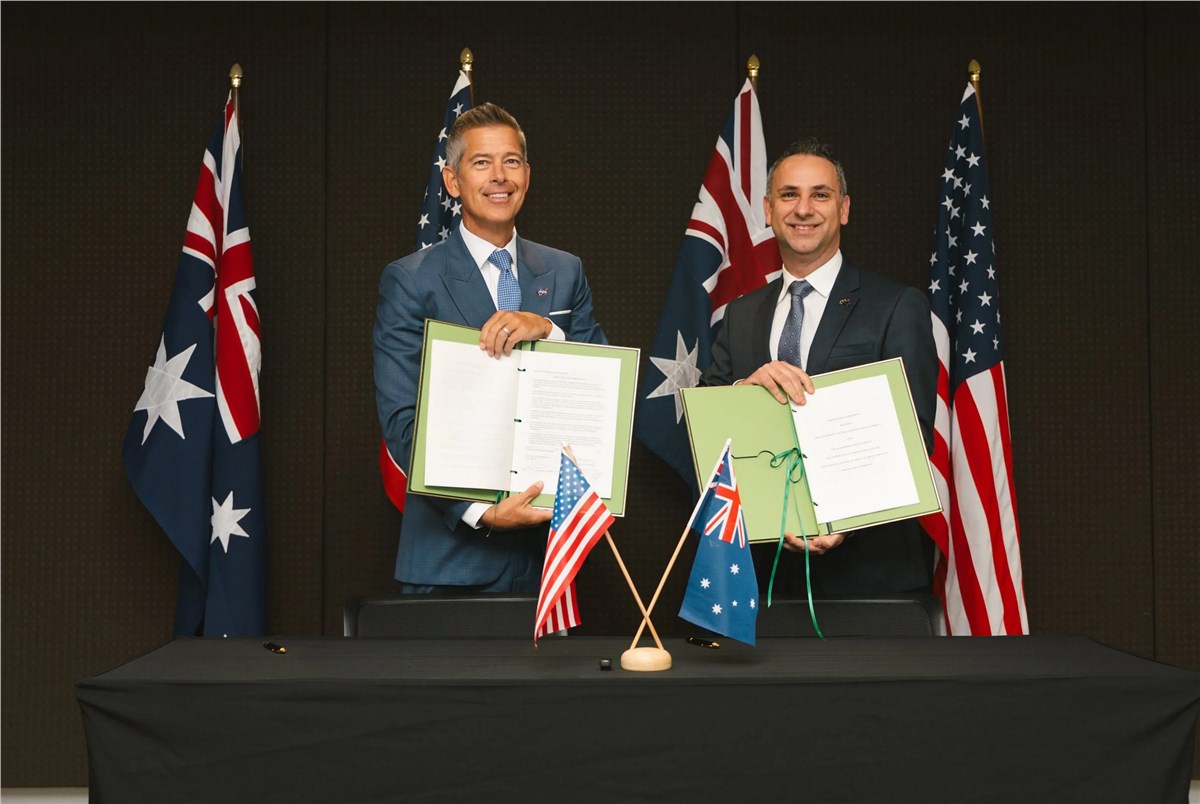
At the International Astronautical Congress in Sydney, the United States and Australia signed a pivotal framework agreement to significantly deepen their collaboration in aeronautics and space exploration. Acting NASA Administrator Sean Duffy and Australian Space Agency Head Enrico Palermo formalized the agreement, which builds upon more than six decades of partnership.
This new “Framework Agreement” establishes a comprehensive legal structure for peaceful cooperation across numerous domains, including space exploration, space science, Earth science, space medicine, and aeronautics research. Duffy emphasized that Australia is a vital, longtime partner, and such international agreements are critical for leveraging resources, increasing capacities, and enhancing scientific returns for all involved. This collaboration is foundational to NASA’s ambitious plans, from operations in low Earth orbit to the Moon, Mars, and beyond under the Artemis campaign.
Australian Minister Tim Ayres highlighted that strengthening the partnership with the U.S. and NASA unlocks new opportunities for Australian technologies and ideas, boosting national industrial capability and economic resilience. The historical context of this partnership is profound, dating to a 1960 cooperative space agreement. Australia’s Canberra Deep Space Communication Complex was instrumental during the Apollo Program and remains a key station in NASA’s Deep Space Network.
As an original signatory to the Artemis Accords, Australia is already deeply integrated into NASA’s lunar exploration vision. A key ongoing project involves an Australian-developed semi-autonomous lunar rover, slated to launch via NASA’s Commercial Lunar Payload Services (CLPS) initiative by the end of this decade. This rover will carry a NASA instrument, demonstrating new technology for scientific and exploration purposes. These international partnerships, reflecting a enduring commitment to peaceful space exploration, are proving critical for the future of human spaceflight, from the International Space Station to the Moon and Mars.
